Thursday, January 15, 2015

Interview with Sour Jazz

I already wrote about Sour Jazz. A band with the unique combination of being good, contemporary and shockingly unknown. Lately I had a pleasure to converse with the people pulling its strings – Cowboy Mark Rubenstein and the World Famous Mr.Ratboy. In fact, that conversation turned out to be so pleasant, that I'll let it hang here for a while before writing a new post – so enjoy the read and see you in few months!
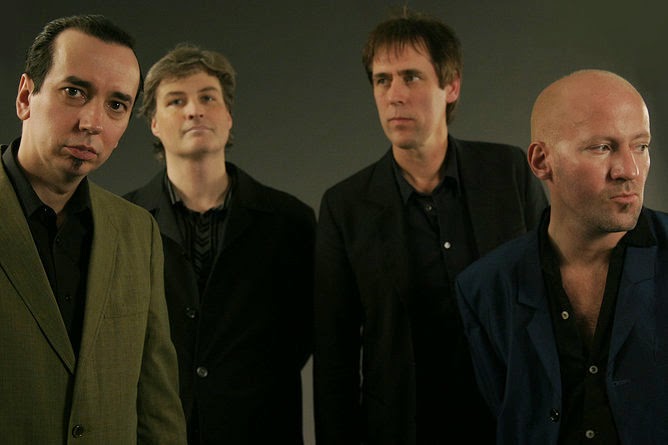

Sour Jazz band photo, Left to right: Mr.Ratboy, Splat Action, Mr.Popular, Cowboy Mark.
SOUR JAZZ. Left to right: 
Mr.Ratboy, Splat Action, Mr.Popular, Cowboy Mark.


Let's start big: What's the meaning of life according to Sour Jazz and you personally? Seriously.
MR RATBOY: The meaning of life might be to discover the meaning of life. I haven’t figured that out yet but what I do know is life is short and if you’re not careful it can become quite dull pretty quickly. One of my goals is to avoid this happening to me.
COWBOY MARK: Bumbling your way towards the grave, making some horrible mistakes along the way, making some beautiful mistakes as well, and learning equally from both. I kind of like the epitaph on Malcolm McLaren's headstone -- "Better a spectacular failure, than a benign success."


Do I get it right, that the band's line-up didn't change after the initial auditions period and the departure of Sami Yaffa?
MR RATBOY: You are absolutely right
COWBOY MARK: For the most part, yeah. The four of us have remained intact from the go, but we've augmented the lineup with various people at various points. Jim Duffy has played keyboards on at least a few tracks off each album, and Steven Moses has contributed his trombone bits in the same way. Jim Jones played a bit of guitar on the last album, 'American Seizure,' and our producer, Daniel Rey, joined us on second guitar when we toured that album in Europe.


Who's where doing what at the moment? I know Mr.Ratboy is in Tokyo and Mark is into art-direction and design in NYC. The rest of the group? Is Splat still in Brooklyn? Mr.Popular? What are the day-time jobs and how do you feel about what each of you is doing besides the music?
MR RATBOY: I have been living in Japan for over 10 years. Currently I work in an Embassy in Tokyo. Even though it might seem quite different from what I was doing earlier, the size of the egos I have to work with nowadays is about the same as in the music business.
COWBOY MARK: Splat is in Silver Spring, Maryland, which is not very far from Washington DC, and Mr Popular is in north-eastern Ohio. So, yeah, the three of us are still living in reasonable proximity to one another. Close enough that, if one of us dies a sudden and tragic death, the other two would be able to make it to the funeral with fairly minimal hassle. It'll be slightly inconvenient, though, if Ratty dies first.
For myself, my proper career is as an Art Director... still a creative pursuit, but a bit more solitary than Sour Jazz, which is infinitely more of a collaborative effort. There's something about the collaborative creative process that still excites me.


Mark, besides design – do you actually draw/paint?
COWBOY MARK: I wish I could say yes, but... no. I have the ability, but lack the time. I see works by artists like Otto Dix, George Grosz, Raoul Hausmann, John Heartfield, Egon Schiele, Dali, and think, yeah, I'm not gonna bother. The greats leave me riddled with insecurity.


I know that a friend of yours is responsible for the cover artworks of Sour Jazz albums, which I consider their integral part in fact. Are there more of his works accessible online?
COWBOY MARK: We grew up together, Wax and I, and have been best friends from a very young age, so involving him with Sour Jazz has always been incredibly important to me. He is also insanely talented... we give him a general idea of what we're looking for, and he's always been able to run with it and produce brilliant results. As an Art Director myself, I never underestimate the importance of an album's design, so I'm really pleased to hear that you like how the music and artwork fit together.
Do you know an old adage that says you can't judge a book by looking at the cover? Early on, Rat and I had a great discussion about how we both believed you could judge an album by the cover, and we both felt strongly that our album covers shouldn't do that. And I think we've succeeded there. I once read a review of either our first or second album in which the reviewer said something about looking at the album cover when it arrived for him to review, and he immediately wondered why anyone would bother sending him a cheesy jazz album to review. He mentioned that it sat in the corner for months, being ignored, before he finally took the album out and gave it a spin and was absolutely shocked that the music was nothing like the album artwork suggested. I remember Rat and I being quite proud of that!
As for Wax's work online, yeah, he has two batches of work online... http://www.drawger.com/houseowax/ is updated regularly, and his general portfolio is at www.houseowax.com.


What is the story behind the fancy guitarist photo “I Live On A Street Called Rock & Roll” from the “Dressed to the Left” booklet?
MR RATBOY: One of my friends had taken this photo somewhere in Africa. I immediately thought this person was much more sincere than some of the professional musicians that were pretending to be broke artist types in the East Village. This guy is the real thing, he probably doesn’t even know it but he truly lives on a street called Rock & Roll.

Interview with Sour Jazz at www.rock-is-dead.info
That very picture


What “one year of Sour Jazz” is like, what does it consist of? Or four years if that should be the modular unit?..
MR RATBOY: Musically it consists of absolutely nothing, a big black hole, a perfect void. Socially, it means a million e-mails shared about anything and everything: music, books, jokes, personal parts, aging…Whatever, we’re friends. Every four years we try to get out of this routine, get together for real and record something. That’s when playing music creeps back in the picture. We do not always succeed in reviving the Sour Jazz corpse, we’ve been trying for a couple of years now, unsuccessfully.
COWBOY MARK: There's no paradigm, really. It can vary, and it does vary. In broad, general terms, we'll record an album, crawl back to our caves and lick our wounds, then tour it after it's been released. After the tour, it's straight back to our caves. This is probably why we're still a band, whatever that means... when we do get together, it's quite a special event... never a slog, never a chore, never anything less than spending time with very dear friends.


Along with Serj Tankian and Electric Six, within less than the last decade, Sour Jazz gave me the hope that something both original and worthy still can be done within rock-n-roll music. I grew up on the British hard/progressive sound of the 1970's, but this new hope is coming mostly from the States in fact. How does it feel from your side of the speakers?
MR RATBOY: Everything coming out of my speakers is old. There has to be new interesting music out there but I’m just not into looking for it anymore. There’s so much older stuff that needs my attention, I got no time left for the youngsters. Since buying a trumpet last Summer, I’ve been listening to a lot of jazz, Yusef Lateef is someone that will keep me busy for a long time.
COWBOY MARK: I'd love to believe that something both original and worthy can still be done within rock music, but I'm not convinced, because I'm not hearing it. The modern problem is, every kid with a computer in his bedroom now has a recording studio, mixing facilities, and a means of distribution and promotion. On one hand, that could be a positive thing. The reality, though, is that there's now far too much out there... no filter, and very little, if any, quality control, means that you have to wade through mountains of shit in hope of finding one tiny jewel. So, yeah, originality and worthiness might be out there, somewhere, but unless a trusted friend puts it under my nose, I haven't the time or energy to hunt for it.


I don't know much about it, but when thinking of rock music in the US, it is Detroit, LA, Seattle and the South (as one big phenomenon) which come to mind first. Any other regions with “the sound” in the States? Mark, still nothing going on around NYC since you last answered that question?
MR RATBOY: Being in Tokyo, I cannot answer this question
COWBOY MARK: Historically, yeah, I know exactly what you're referring to, but it doesn't exist any longer, apart from tired marketing ploys. Regional distinctions, musically speaking, began dying in the early 1980s, with the introduction of nationwide cable television and radio. Suddenly, the kids in Nevada were being exposed to the exact same music as the kids in Cincinnati and Brooklyn and Alabama, which had a homogenizing effect. When the input is the same, so is the output.
NYC? If there's anything going on here, I'm either unaware of it, or far too old for it.


Mr.Ratboy, what is the rock music scene in Japan? From what I imagine, it is the whole different universe, isn't it? Names, trends, genres, emotions; contemporary or within a historical perspective – would appreciate any details.
MR RATBOY: The music business in Japan is hopeless, just like the political scene. There might be an underground scene but it’s so deep below the surface that I don’t have the energy to dig it up. Anyway, most of the underground groups I was exposed to were either, silly, derivative, noisy or plain awful. In Japan, the entertainment business is one huge machine that provides the audience with a limited amount of idols that will play all the roles required. The same day, a popular “artist” could be seen in a variety of different settings. The morning news, a dozen commercials, a soap opera, a quiz show, a music video channel, a manga exhibition, a political debate…it’s endless, once “artists” access this level, they become like a virus, it’s impossible to get rid of them. As far as the music they play is concerned, it’s all similar since it’s all written by a few selected composers/producers who have been rehashing the same ideas for decades. It’s depressing.
One current Band I do like is Ra:IN
http://en.wikipedia.org/wiki/Rain_(Japanese_band)
My all-time favorite Japanese band is RC Succession
http://en.wikipedia.org/wiki/RC_Succession


And what about the records prints? I was always wondering how the famous "Japanese Release" phenomenon was born? Those rock and metal rarities necessarily packed with tons of extra material.
MR RATBOY: I’m not sure how the “Japanese pressing phenomenon” started but I do know that, with the advent of CDs it has lost some of its shine. At the time of LP’s, the quality of the Japanese pressings were far superior to the other copies of the same record. We’re talking about not only the vinyl, but the cardboard cover being much thicker and nicely printed. With the added bonus of the “OBI” ( the vertical strip of paper with the name of the band/title in Japanese) you ended up with a pretty desirable item that cost a lot more than a regular LP. CDs being digital, they all sound pretty similar and the cover being a tiny piece of paper folded in a plastic case, there’s not much left to differentiate a Japanese CD pressing from a cheaper US or Euro version. Nowadays, the Japanese labels always insist on having bonus tracks on their releases, it has kept the interest going for the Japanese pressings of non-Japanese bands but the extra material is not always worth the extra money the CD costs…It depends on the bands, really, some older bands did sit on a wealth on quality unreleased studio recordings, and it’s always nice to get some of that stuff along with the regular album.


What I would really like to talk about is how is it to be a rock-n-roll band these days and where is all this crap going? How does the industry work? What are the options for the kids starting a band today? I know you've chosen yours, but I also believe you were in a somewhat different position (from many perspectives) when forming Sour Jazz...
MR RATBOY: Music is a great passion and hobby but a terrible day job. Unless you “make it”, the money is bad, at least for the musician. Everyone involved will get paid before you, producers, managers, publishers, engineers…You’ll only get paid if there’s some money left after they take their share. You will run into a million people who will pretend that they know what is good for you and will attempt to put you on the right track. To try to succeed you will have to compromise and will lose the focus you had when only you and your friends were involved. Along with the focus you’ll lose your enthusiasm, naiveté and probably the friends you were playing with when you started. If you’re lucky, you’ll end up with a lousy job.
When this band was formed we already knew all that, so first we made sure we enjoyed each other’s company before playing a single note. We didn’t really know what we wanted to sound like but we sure knew what to avoid. After Sour Jazz started sounding like something we could be proud of, we soldiered on and didn’t let anyone distract us from our original goal. Today, we still are friends and when we manage to get together, we still sound good, to me that’s invaluable.
Our non-existent touring schedule coupled with our reluctance to take part in the social media phenomenon has rendered us invisible. I personally don’t care since I’m proud of the music we have produced so far and hopefully will continue to produce. Some days, I do believe we deserve a Wikipedia page but I’m definitely not going to be the one starting it!
COWBOY MARK: The records that I've always loved the most, and the gigs that I've enjoyed the most, were all performed by artists doing what they did simply because they had to. I'm drawn to artists who produce only because they have it in themselves to do so, and need the release despite any potential lack of platform or success, critical or commercial. I'm excited by the individual, the one-offs, the artists venting some nameless something that's deep inside of them, whether it's Jerry Lee or Nina Simone or Bo Diddley or Ian Hunter. So, yeah, the only option for kids starting bands today is to honor your instincts, honor your gut, and respect the song.
How does the industry work these days? For the most part, we exist completely outside of the industry, but I do know that the industry is quite different this week than it was last week, and will change into something else entirely next week. When Sour Jazz started, it was still very much a matter of going on tour to promote a new album. Now, you put out an album to promote a tour. As a musician, you earn your living by selling t-shirts on the road.


Thinking about it - this industry thing is there for merely a hundred years, and twice less in its current form. Still the music itself is pretty much timeless - J.S. Bach and The Beatles share shelves in the same stores and keep selling. The larger and larger amounts of "a product" keep being added to those shelves and all the media every year, making it harder to find the worthy things, but somehow I refuse to believe the music will eventually get mixed and blurred into the uniform, tasteless but easily digestible grey mass. Optimists think that the Internet and the new technological revolution will bring arts into focus (it's worth noting that the Beatlemania would've been way less plausible without the television for one). What would be your guess on the shape of the music and associated business at the next milestone, maybe decades from now? And do you see the hope for the musicians to break the current system? In which way?
COWBOY MARK: I wouldn't even like to guess, really! My instinct is that music will become even more disposable in the future, and far less valued. But there will always remain a minority of people for whom music is almost a religion, and these people will continue to collect and consume with passion. I'd like to see the album make a big comeback... playlists seem to be the new albums now, which I find to be a flimsy substitute. I understand and sort of appreciate the personalization of the whole playlist concept, but I miss the lacking artistic statement.
As for the music business, the music industry, I can't imagine what it will evolve into in the coming years and decades. I suppose I wouldn't be surprised if it completely stops being a business. Or, if it does remain a business, I can see it resting completely in the hands of the musicians themselves, with the musicians themselves reaping any financial rewards. For Sour Jazz, though, none of us have the time or the energy or the inclination to dedicate ourselves to the business side of things. We'd much rather deal only with the production side of things -- the writing, arranging, recording -- and let the record label deal with the rest.
In short, I guess most musicians will have to keep their day jobs!
MR RATBOY: That a very difficult question…The business as we know it last century is dead, that’s for sure. People used to be ready to pay for their entertainment but the internet has changed all that. People now expect to get EVERYTHING for free, I don’t blame them but it has somewhat destroyed the music business as we knew it. Not a bad thing, really, it didn’t do much for the musicians anyway. Now musicians have to work harder to promote themselves and constantly adapt to the new tools available for them. As long as they can keep up, they might be able to keep interest for their music alive. The internet also gives them a direct way to connect with the fans and to sell them all kinds of crap (ringtones!) without having to use middle-men. I guess it can work for some people. The problem is that today’s musician spends an awful lot of time on his PC, describing his every move, meal, thought or fart, and the music suffers from that. With this new system, it looks to me that the minute the artist stops promoting himself, he starts disappearing… I hope I’m wrong but the music is now secondary to the popularity (how many “friends/hits/clicks”) one can achieve on the net. For that reason I don’t believe that much of today’s music will become timeless. I’m not really complaining about it, it’s just not a game I’m willing to play and personally I’d rather concentrate on the music and create cool stuff that sadly no-one will ever hear. I’m not trying to make money with music anymore but I still think that the best source of income for a musician is the money he gets for performing live. A lot of bluesmen realized that in the 60’s & 70’s (Chuck Berry!) and they started playing as much as they could without concentrating much on the recordings. Even the Rolling Stones do it these days, they tour without any new music, they do not need it, people just want to see them play the old stuff so they oblige. Dylan might be the ultimate example of that attitude.
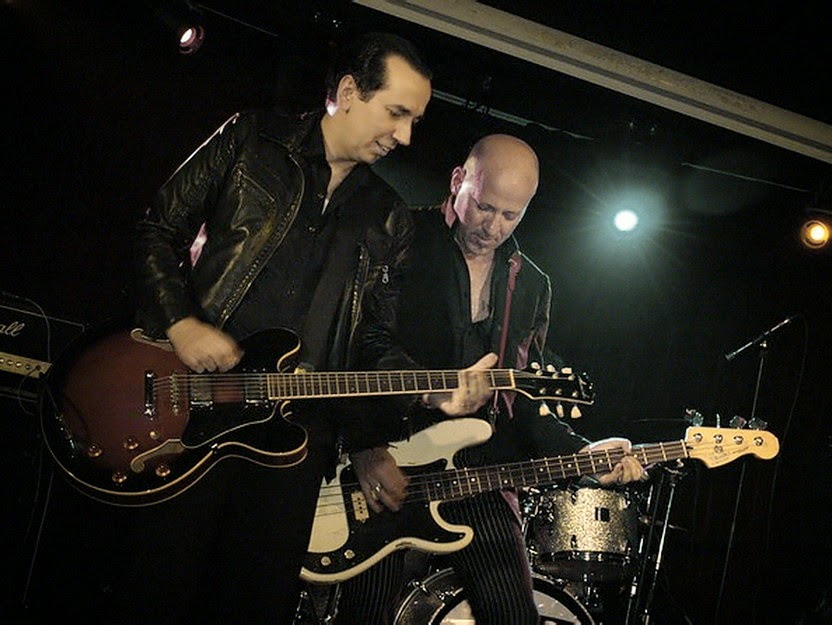

Mr.Ratboy and Cowboy Mark of Sour Jazz live on stage
The strings of Sour Jazz


And a chicken-egg question: is it the records or the gigs that come first for you? Regardless of what happens more often - what do you value most?
COWBOY MARK: We began as a live band who recorded, but quickly became a recording band who occasionally tours. For me, personally, I prefer recording to touring, because the studio is much more about the creative process than the road is. Recording is about creating, while playing live is about re-creating. Without that creative process, and the collaborative nature of it, I can't see much appeal to being in a band. I love the experience of transforming rough ideas into lasting pieces of music, often in the course of hours or a few days. And I especially love how a big part of that process, for me at least, still very much remains a mystery to me even after all these years.
MR RATBOY: The recordings last forever, most gigs are quickly forgotten by all the parties involved. For me, it’s definitely the records.


Although you've been partially answering this kind of questions before, I'd still love to ask each of you to list what you believe to be the truly outstanding rock albums. Records that you feel possess more than a personal appeal alone, one-of-a-kind LPs. As many as you'd choose to name, with or without your commentary.
MR RATBOY: Stooges “Funhouse”/ Lou Reed “Berlin”& “Coney Island Baby”/The Modern Lovers’ first album/Iggy pop “New Values”/ The Only Ones’ first album/Pere Ubu “Modern Dance”/Any Bo Diddley album/Chris Spedding “Hurt”/Rolling Stones “Black & Blue”/Graham Parker “Stick to Me”…There are too many to mention really
COWBOY MARK: 'Funhouse' by The Stooges... just about anything at all by Chris Spedding or Willy DeVille or Jerry Lee Lewis... 'Tender Prey' by Nick Cave & The Bad Seeds... 'Here Come The Warm Jets' by Eno... for the most part, though, I tend to focus on artists, as opposed to albums. 'Funhouse' is so distilled to primal basics, I can't imagine anyone not responding to it one way or another. 'Here Come The Warm Jets' is quite special, in that it's one of the few albums that I always approach as a whole, never for one or two or three individual songs. The first album I ever bought was 'Desolation Boulevard' by the Sweet, and I still listen to it regularly.
As far as non-rock is concerned, I've been listening to a whole lot of old Jimmy Smith albums lately. For contemporary stuff, I pretty much only listen to my friends' bands -- The Jim Jones Revue, The Flaming Stars. My absolute favourite discovery from the last year or so is an album titled 'See,' by a gentleman named Pete Williams. A very classy affair... great songs, great performances, great production.


In a similar fashion, would you care to recommend some records based on my personal preferences (http://www.rock-is-dead.info/2013/06/the-list-of-recommended-rock-albums.html)? Not necessarily within the rock-n-roll scope. Mr.Ratboy, anything in particular from Gentle Giant?
MR RATBOY: Gentle Giant “Free Hand” & “Interview”/ Simon Dupree and the Big Sound/Crawler “First album” (1977)/Harvey Mandel “Feel the Sound” & “Shangrenade”/Pavlov’s Dog “At the sound of the Bell” & “Pampered Menial”/Ted Nugent “First Album”.
I visited your website again, we have lot in common. I'm a big Rainbow Rising fan (Dio!) and I also always thought that Magician's Birthday & Demons and Wizards were joined at the hip. I would put Salisbury on your list, that was my first Uriah Heep album and it still blows my mind today. How about Nazareth's Loud & Proud? Another nice Roger Glover production...
COWBOY MARK: For starters, you only have one Sour Jazz album on that list... probably an oversight on your part, though, yeah? Really nice to see 'Wonderful' by Madness on there... 'Drip Fed Fred' with Ian Dury was such a fitting and beautiful final chapter to Dury's life. If you haven't heard their follow-up album, 'The Liberty of Norton Folgate,' I can recommend it. And seeing a couple ELO albums on your list, if you haven't got all of Roy Wood's albums, especially the ones with Wizzard, you need them!


I'm striving to keep The List balanced, so the only thing I can say in my pathetic defense is that Sour Jazz has roughly the same percentage of studio discography represented as Led Zeppelin. (I do proudly own all of your studio CDs though!) For the same sake of balancing Salisbury and many other Heep's albums from the 70's are not listed - but they are incredible indeed. Loud 'n' Proud is great too - the first side especially, although I generally prefer later Nazareth, but it always amazed me how much their neighboring releases could differ. Didn't know it was produced by Glover - reminds of Sin After Sin which stands out so much to me out of the whole Judas Priest discography. And thank you for all the suggestions - many titles I wasn't aware of - quite exciting!

Mr. Ratboy, I did enjoy the solo album of yours available from sourjazz.com while researching for this interview, but didn't find much information on it. I figured you did the writing, vocals and most of the instruments - is that correct? Who else was involved and in which roles? Any details on the recording process and/or particular tracks?
COWBOY MARK: I designed the packaging for the vinyl version!
MR RATBOY: I sang, played all the guitars, bass and EML synthesizers. Screamin’ Joe Rizzo played drums. The guests included Steve Wynn (Dream Syndicate) on vocals, Phast Phreddie Patterson on sax, Stellan Wahlstrom on harmonica and Jim Duffy on keyboards. I hope I didn’t forget anyone, it’s been a long time. I wrote all the music and the lyrics were mostly by Mark Phelan with a couple of things by Chris Barry. The only cover was “A Gift” by Lou Reed.
It’s funny you mention my solo album, I have a few songs I wrote for an aborted band here in Tokyo that I’m thinking about recording solo. If I ever find the energy, there might be new Mr. Ratboy solo songs available soon…


And is it already the time to reveal some details on the new Sour Jazz album?
COWBOY MARK: It's in the works, and eleven or twelve tracks have been partially recorded, but I wouldn't like to guess when it will be finished and released. There's a vague plan for a 2015 release, but that's going to require a bit of cooperation that's been difficult to get. I can tell you, though, that Daniel Rey is producing it.


Really happy to hear that and looking forward - count to see me in the line on the release date! Thank you so much for the interesting conversation and hope to keep seeing Sour Jazz in the limelight!
COWBOY MARK: You'll hear it before the release date, I can promise you!
 
–--
You can find much more (including free music downloads and their previous interviews) at The Official Sour Jazz Website.

Also see http://www.theemarkives.com/ for Mark's design work.

Tuesday, May 27, 2014

Led Zeppelin II, 1969

Led Zeppelin - Led Zeppelin II album cover, 1969
01 - Whole Lotta Love
02 - What Is and What Should Never Be
03 - The Lemon Song
04 - Thank You
05 - Heartbreaker
06 - Living Loving Maid (She's Just a Woman)
07 - Ramble On
08 - Moby Dick
09 - Bring It On Home
It's probably the time to stop apologizing for the irregularity of these posts – they happen when they happen, so - to the topic:

Clearly I'm not going to say anything new on this. Led Zeppelin is a milestone in the history of music. I've just made a quick check and it didn't come as a big surprise that every single track of their nine studio albums has its own article on Wikipedia. They are the ultimate rock band from the debut album's cover to the disbanding after John Bonham's death. In every little bit.

Between myself and me, I mark three distinct sections within their discography – a 3 albums each, chronologically. This first group (conveniently numbered) is the youngest and the fastest and could be as well represented by any other record on The List – but let it be LZII. Maybe I chose this particular album because of the strange attractiveness of its cult opening track, or maybe due to the perfect balance of fast and gentle pieces, or maybe for that transition from Heartbreaker to Living Loving Maid, or for the quote from the times when Hollywood still knew how to make movies...

Being as well their most accessible batch to listen in my humble opinion, all three first Zeppelins are a single phenomenon which I don't think anyone can afford to miss. It is life itself, bottled into the disc's sleeve. Vibrant, breathing and running out of breath; yelling, screaming and whispering. Recall it, feel it, press play.

Gotta go now – time to ramble on. The usual links worth of exploration below

Full album's text at Alex Reisner's

Wikipedia: Album|Artist 


And something special the next time.

Tuesday, March 4, 2014

Wayne Kramer - Citizen Wayne, 1997

Wayne Kramer - Citizen Wayne album cover, 1997
01 - Stranger In The House
02 - Back When Dogs Could Talk
03 - Revolution In Apt. 29
04 - Down On The Ground
05 - Shining Mr. Lincoln's Shoes
06 - Dope For Democracy
07 - No Easy Way Out
08 - You Don't Know My Name
09 - Count Time
10 - Snatched Defeat
11 - Doing The Work
12 - A Farewell To Whiskey
In the very first post I had a stupidity to claim I’ve got something to say. Not in comparison with him - the one who has something to say indeed. And it looks like I’m gonna be using more of his words than mine today.

Some musicians come with a title - Britain awarded us with enough Sirs alone. The title sticking to this American is Brother. Brother Wayne Kramer. Since the debut MC5 record till now and onwards.

Straight away with the opening riffs of Stranger in the House you feel something different going. And then there is poetry throughout and on top of it all. Need to hear it, really.


 As for myself, I hear the great revolutionist behind his sounds, and Citizen Wayne is all about revolutions to me. Not just musically, but also as a reflection of his whole life story. Not just the third track - the whole thing.

We’re having a revolution
In apartment 29
Someone brought bazookas
Someone’s chilling wine

We’re having a revolution
And we’re having it right now
There will be blood and bullets….

Rough, partially surreal, sincere, like an open wound. The album overall and the genius ending of this track in particular. I’d love to write more, but all the words coming to mind are only other quotations from Brother Wayne Kramer:

My brothers and I rolled out from Detroit
Down to Chicago to join in the fight
Kinda shit that we did all the time
Play for the people and don’t make a dime...

Nuff Said. You know what to do.


Wayne Kramer on Wikipedia

And let it be Led Zeppelin next time.


Sunday, December 15, 2013

Dio - Holy Diver, 1983

Dio - Holy Diver album cover, 1983
01 - Stand Up And Shout
02 - Holy Diver
03 - Gypsy
04 - Caught In The Middle
05 - Don't Talk To Strangers
06 - Straight Through The Heart
07 - Invisible
08 - Rainbow In The Dark
09 - Shame On The Night
Strength is not a function of size, and he wasn't tall. But the strong one he is. Ronald James Padavona, known to most of us as just Dio (meaning “God” in Italian) – the man this world has lost only few years ago; the man to stay remembered for how he enriched the rock music.

Brought up on opera records, a self-taught vocalist with a strength of a million. It was his voice to support me whenever things were getting really bad, his strength I could always rely on. It was him to replace Ozzy in Black Sabbath, him to become a landmark voice of Rainbow, him to record some of the greatest parts for The Butterfly Ball… Progressively moving towards heavier and heavier sound along the career, he didn't record a single soft song with his band of the same name Dio for the first 13 years since this debut in 1983 till the closing track of The Angry Machines in 1996.

So let me offer to your attention what I find to be the best Dio's album – Holy Diver. Not too much sense in going through the tracks – they're all brilliant if you ask me. From Stand Up And Shout to Shame On The Night. Rainbow In The Dark is quite an anthem. And on and on… Just note the line-up: Jimmy Bain, former of Rainbow; Vinny Appice whose rhythms always build up around Dio’s part, constructing one whole together; and of course Vivian Campbell - the one to replace Steve Clark in Def Leppard few years after.

Here is the quote from RJD himself on the time of recording:
“It was a good time to be in that band. It was perfect for us. Everything just fell into place. The ethic in rehearsal was amazing. The effort in the recording was just as good. Everybody wanted it to be great. We really believed in what we were doing and couldn't wait to get that product out and have people hear it."

Thus I advise you to get to it and enjoy – it's a wonderful heavy album. And note Murray on the cover – the band's mascot to appear on every early record's front.

And just to embed a piece of YouTube – here is the original promotional video for the title track (quite funny visual by today's standards – 80's – what can you do...):


Full album's text at DarkLyrics

Wikipedia: Album|Artist 

Wayne Kramer next time.

Monday, November 11, 2013

Animusic - Part 1

First of all, I would like to thank both of you, my loyal readers, for the patience and tolerance shown so far. And then, after a notable pause, goes not yet another album, but that very visual intermission mentioned the last time.

Since the day I've learned of it about ten years ago, the Animusic project did influence me significantly as a visual artist. Now, revealed by a memory flash, it just seemed unknown and cool enough to share over both of my blogs (laziness rules).

They have released 2 films back then and are working on finishing the third one now after the successful kickstarter campaign.

Pipe Dream is probably the most fascinating piece in these collections of bizarre awesomeness. Trying to think about it - I guess it is seeing the sounds before they appear, that makes the experience and impression that unique and strong.


Check out their website www.animusic.com

And a couple of insights into the graphics involved are coming in the second part at www.the-working-man.org

The great and mighty Dio next time.

Sunday, October 13, 2013

Manfred Mann's Earth Band - Angel Station, 1979

Manfred Mann's Earth Band - Angel Station album cover, 1979
01 - Don't Kill It Carol
02 - You Angel You
03 - Hollywood Town
04 - Belle" of the Earth
05 - Platform End
06 - Angels at My Gate
07 - You Are - I Am
08 - Waiting for the Rain
09 - Resurrection
I am only the working man (as my other blog suggests) and yes - fitting sixty-something hours into a five-days working week under a decent flu does slow me down with posts a bit. Nevertheless, here goes (just as was promised the last time) something more classical.

I guess the people are right and it is Nightingales and Bombers which should be considered Manfred Mann’s shiniest record. But may be because Spirits In The Night is actually a cover and was known too well to me before getting to hear the album, or may be because Angel Station just sounds more unusual, I am choosing it to represent Manfred Mann and his Earth Band in my List of Recommended Rock Albums.

This LP is a surreal and gentle riddle. A puzzle set in Maurits Escher’s space, just like the brilliant artwork suggests (not that easy to find the proper credits, but I would guess it should be shared between Martin Poole and John Shaw).

Don’t Kill It Carol - the opening track - is the essence of strange beauty. Fastest piece of the album, very poetic in the text and arranged with that synthesized sound of 1970’s, which would totally lose its appeal in the following 1980’s. This mixture produces a cognitive dissonance of a sort - a feeling that carries throughout the tracklist. As if a noir film director would have shot a love story set in the rich cumulus cloudscape. And then the whole thing sounds surprisingly pop.

Well, this is Manfred Mann - The Great Experimentator with a track record in pop, rock, electronic and jazz fusion. One person understanding and feeling the Music and the Universe through it. In case you’re not familiar with, tonight’s Wikipedia references at the post’s end are particularly worthy. I find the album article especially interesting with the insight into the structural aspects of the Angel Station (which I can at least loosely try to understand thanks to the magic film on how music works).

Was thinking of throwing in more epithets to describe this MMEB’s masterpiece, but though even have found them, I'd rather suggest you just press play and listen to the record. In no rush, lights dimmed and with maximum comfort achievable wherever you are at the moment.

A sort of visual intermission next time.


Manfred_ Mann's_Earth_Band_Angel_Station_lyrics_1979.txt

Wikipedia: Album|Artist 


P.S. Went on listening to Masque after Angel Station while writing this - the Mann is really good.

Sunday, September 29, 2013

Gas Huffer - One Inch Masters, 1994

Gas Huffer - One Inch Masters album cover, 1994
01 - Crooked Bird
02 - Mr. Sudbuster
03 - More of Everything
04 - Stay in Your House
05 - 14th & Jefferson
06 - Walla Walla Bang Bang
07 - Appendix Gone
08 - Chicken Foot
09 - What's in the Bag?
10 - Hand of the Nomad
11 - Quasimodo '94
12 - No Smoking
13 - Action/Adventure
14 - Goat No Have
Now when Lemonade for Vampires has arrived and I became a happy owner of Gas Huffer's complete studio discography (not too easy thing when you live in Europe), I can confirm that One Inch Masters is the best of their albums to me. Melodic diversity and overall quality of the material are the points which make this record stand out most significantly in the band’s body of work.

Gas Huffer is another artist I've got introduced to through my Prague's favorite Maximum Underground. A garage/punk quartet from Seattle – the mother-town of grunge music. They possess both the great energy and tons of irony blending into the sparkling songwriting - “goofing around” as they put it themselves.

Formed in 1989 and disbanded in 2006, GH is one of those groups which never went through a lineup change. There is something very right in it.

The frontman Matt Wright wouldn't probably get a prize for his vocal talents alone, but that charismatic energy he's putting into the performance generously compensates for all possible lacks. I mean, Mark Knopfler also doesn’t have that much of a voice and still he sounds.

Sincerely brilliant record. What’s In The Bag?, 14th &Jefferson, Stay in Your House, Crooked Bird... - the whole tracklist is outstanding indeed. How many songs do you know about the contents of a bag or discarding an appendix in general? And then how many good ones? These are the ones.

Guess it’s too late to order, but for every album release prior to the 6th album they were creating a comic book which included the lyrics as well. (The bassist Joe Newton is also known as a deputy art director for Rolling Stone magazine by the way). Without those at hand, I managed to scratch together only few tracks’ lyrics from the record - thus would appreciate anyone willing to share some texts.

And just in case someone would care to check on my humble opinion, here goes the rest of them sorted by the level of personal appeal:

One Inch Masters, 1994 - see above.

The Inhuman Ordeal of Special Agent Gas Huffer, 1996 - Tiny Life is a gem.

Lemonade for Vampires, 2005 - more serious, still wild.

Just Beautiful Music, 1998 - a touch softer, as the cover suggests.

The Rest of Us, 2002 - no, it’s not a compilation.

Integrity, Technology & Service, 1992; Janitors of Tomorrow, 1991 - the two first albums from Empty Records are punkier and noisier than later work - not exactly my style, but I imagine might be the opposite for someone else.


Gas_Huffer_One_Inch_Masters_lyrics_incomplete.txt

Wikipedia: Album|Artist 


Next time - something more classical from The List.

Sunday, September 15, 2013

How Music Works

How Music Works with Howard Goodall is an exciting journey through the fundamentals required for understanding music with a brilliant guide. Four episodes of the show cover the key aspects: Melody, Rhythm, Harmony and Bass.


The only similar show I know is Understanding The Fundamentals of Music by Professor Robert Greenberg.

Next time: Gas Huffer.

Sunday, September 8, 2013

Roger Glover and Guests - The Butterfly Ball and the Grasshopper’s Feast, 1974

Roger Glover and Guests - The Butterfly Ball and the Grasshopper’s Feast album cover, 1974
01 - Dawn
02 - Get Ready
03 - Saffron Dormouse And Lizzy Bee
04 - Harlequin Hare
05 - Old Blind Mole
06 - Magician Moth
07 - No Solution
08 - Behind The Smile
09 - Fly Away
10 - Aranea
11 - Sitting In A Dream
12 - Waiting
13 - Sir Maximus Mouse
14 - Dreams Of Sir Bedivere
15 - Together Again
16 - Watch Out For The Bat
17 - Little Chalk Blue
18 - The Feast
19 - Love Is All
20 - Homeward
Roger Glover - one of those legend-makers and bass-playing songwriters (McCartney, Sting). This album – overlooked, underrated and pretty much forgotten – stands out of his work for me so much, that I rather associate his name with The Butterfly Ball first than even with Deep Purple. It is a musical created by some of the biggest rock names after a children's book based on a poem from nineteenth century. If that doesn't sound intriguing enough, here are some of those names:

David Coverdale of Deep Purple and Whitesnake

Ronnie James Dio of Dio, Black Sabbath and Rainbow

Michael Giles of King Crimson

Glenn Hughes of Deep Purple, Black Sabbath and Phenomena

Eddie Jobson of Curved Air, Roxy Music and Jethro Tull

John Lawton of Uriah Heep and Lucifer’s Friend

Micky Lee Soule of Elf and Rainbow


Can you imagine Ronnie James Dio singing a little froggy's part? Those, familiar with his Elf years probably should, but those coming from his metal side might not. It's charming.

Love Is All seems to be the only track widely recognized. Although a very good song to me, I perceive it as a version of All You Need Is Love by you know who. Personal favorites are rather Old Blind Mole and Sitting In A Dream. Then go Behind The Smile, Sir Maximus Mouse, Watch Out For The Bat and Little Chalk Blue.

There was a wonderful CD reprint in 90's (could be the one from 1995) in a cardboard sleeve and with quite interesting liner notes – not the copy I own though (mine is a veteran CD from 1989 with some history attached, including quite an effort from my father to obtain it around 14 years ago and that little IT-slavery he got me into in return for a record :)

Anyway, recalling some of those notes and things read/heard elsewhere, I can't stop thinking of this Deep Purple turmoil background Glover must've been going through those years: leaving the band due to that Blackmore thing – arranging a new band with Dio during the Butterfly Ball sessions – Blackmore leaving DP and getting Dio to his newly formed Rainbow instead – Glover producing Rainbow... Still in the middle of it, beaten by the oil crisis of '73 but powered by a lot of talent The Butterfly Ball and the Grasshopper's Feast was born. A record emitting light and celebrating life in its various styles and genres. Filled with enthusiasm and devotion, where songs were conceived right in the studio and just before recording.

Transparent and gentle. As if artwork by Alan Aldridge alone wouldn't make it worth owning.

An animated feature film has been planned as well, however didn't happen due to aforementioned crisis. Here is what has left:


Butterfly Ball's lyrics at Roger Glover's official website

Wikipedia: Album|Artist 

Next time: How Music Works

Saturday, August 31, 2013

Sour Jazz - American Seizure, 2009

Sour Jazz - American Seizure album cover, 2009
01 - Masquerader
02 - Fun Dumb Daze
03 - Cigarettes & Coughy
04 - Bad Times Coming
05 - Black Maria
06 - Action!
07 - Without You
08 - Monsieur Flop
09 - Nippon Twist
10 - Mrs Popular
11 - Little Hands
My new visual effects showreel is being presented today. A piece of music I dared to choose to accompany it comes from American Seizure – an album by a contemporary New York rock band Sour Jazz, which occupies its place on the list of recommended rock albums for a reason. Thus I'd like to use this occasion to share few words about them.

What happens to punks when they grow up? The whole concept sounds like oxymoron, but something does. Some just end, some refuse, some keep getting younger, some start blogging and some keep writing music. Real music.

How does American Seizure sound? Pretty much like the cover looks. Sour Jazz's visual representation seems to fit their music quite well in general. Cardboard sleeve of the CD gets worn out on the edges fast, but even through it's rough matte finish it already gives you an idea that you're holding something different in your hands. Words that come to mind trying to describe the sound are “funky” and “haiku”. Well, quite modernist haiku probably... Tito & Tarantula would be another association – partially in sound, a lot in visual.

Not too fast, not too slow. With keyboards and saxophone. Energy without yelling. RHYTHM in capitals. Lazy charismatic vocals. Guitar gorgeously showing off.

If, like me, you grew up in a city – they'll make you feel nostalgic about your hometown. They love the city and they are taking me for a walk with them on almost every track. This resonance could be purely personal, but it's strong enough to be shared here. Other personal preferences from this record are Masquerader, Action! and Cigarettes & Coughy.

Apparently they are releasing a studio CD once in four years – so let's hope.

They are good. And shockingly, they are happening right now. I don't know them, I am doing this on my own stupid initiative, but I am urging you to try them out and, if you'd happen to experience similar kind of delight - spread the word. It's a shame they still don't even have a Wikipedia article. Really.

Sour Jazz's official website. Some free music downloads there among the other bits.

Last thing: I'd appreciate the lyrics, if anyone has it – googling wasn't so efficient for me yet...

Next time: The Butterfly Ball

Sunday, August 25, 2013

Rush - Test for Echo, 1996

Rush - Test for Echo album cover, 1996
01 - Test for Echo
02 - Driven
03 - Half the World
04 - The Color of Right
05 - Time and Motion
06 - Totem
07 - Dog Years
08 - Virtuality
09 - Resist
10 - Limbo
11 - Carve Away the Stone
Here we go. Vertigo...

Given you don't live in Canada, how many Canadian bands do you know? Given now the positive number, chances are Rush is on the list. They are big, and they are good. And there are definitely things outstanding about them.

A trio to start with. A progressive rock trio to amplify the challenge of potential shortage of hands. Good thing – it's really not about the quantity. Alex Lifeson, the founding member, deals with guitars – all kinds of guitars – he's good at it. Frontman Geddy Lee takes on the bass and keyboards responsibilities, vocals aside. Neil Peart – a drummer. Only? Not really, since he is the person responsible for Rush lyrics since the time he joined the group (which is pretty much the time the group exists). Only 1.5 lineup changes since 1968, both happened before the second album out of 19 so far. And on top of this all - they are the artists (sadly enough, not that frequent epithet in popular music, but it is theirs rightfully).

Band's discography comes in stages. First there was hard rock mixed with classical progressive sound of the time. Surprisingly, not my favorite period though. Then came electronics around 80's. Not the electronics-electronics, but surely something which can be opposed to good old yell-drums-n-guitars within the rock music. And yet later, around the change of millenia, Rush's sound deviated again into pretty much the mixture of their previous experiences. Test for Echo was released at the border of these last two periods and incorporates the best of both worlds in my humble opinion.

A wonderful record, balanced with energy of faster pieces, emotional strains and melodism. A record where Geddy shows to the full extent one thing I value him as a vocalist most for: insinuation – ability to subdue the strongest emotions in the voice, only to make them stand out more through this suppression. Listen to it – it's like a man torn apart by the feelings of unbearable strength, but directing his last powers not to let anyone see. Something I was once taught a man should be.

And being a visual artist, another thing I appreciate is that Rush traditionally devote more time and thought to the look of their albums than would be expected from a rock'n'roll band. Test for Echo not being an exception.

As usual – hope you'd give it a try and find pleasing. Next time – Sour Jazz.


Rush_Test_for_Echo_lyrics_1996.txt

Wikipedia: Album|Artist 


Saturday, August 17, 2013

Jethro Tull - Rock Island, 1989

Jethro Tull – Rock Island album cover, 1989
01 - Kissing Willie
02 - The Rattlesnake Trail
03 - Ears Of Tin
04 - Undressed To Kill
05 - Rock Island
06 - Heavy Water
07 - Another Christmas Song
08 - The Whaler's Dues
09 - Big Riff And Mando
10 - Strange Avenues
I really like it when Jethro Tull play hard rock. They have some special kind of grace about it. Locomotive Breath, Something’s on the Move, This Is Not Love... And Rock Island, although not really a hard rock record in my understanding, still lets you taste this side of Mr.Anderson and friends more than usual. Enough to feed the hungry.

Opening with Kissing Willie, the original side A is the faster one. I might be alone in this, but in places find it reminiscent of some late Dire Straits (like The Bug). The title track, closing the side, makes the whole album’s statement - just like the sleeve artwork. I don't know how much of the intention was there (reminds of Jan Anderson’s comment on Aqualung’s conceptuality), but one theme which I see going through the record and its every song is loneliness. A solitude of one kind or another. And the record really explores all various shapes, tastes and sizes of ot.

The tempo and loudness tend to slow down overall in the second half of the album, with Strange Avenues sounding already like a residue. Time to confess here: I used to perceive this song as a weak and a touch boring one while admiring Rock Island’s hard sound, till a friend noted it’s the best track of the LP to him. So then I finally heard it - I mean really heard. It’s a truly strong one - simply unrealistic emotional strain packed into a piece of whisper. Beautiful. And very sad. ...looking like a record cover from 1971...

Take a closer look at the lyrics (back to the overall album now) - as usually with Tull - it’s real poetry. And if I may suggest another worthy record from this period - it would be Catfish Rising.


Jethro_Tull_Rock_Island_lyrics_1989.txt

Wikipedia: Album|Artist 


Next time - Rush.

Sunday, August 11, 2013

I know that no one cares...

Professor of Occultism and Demonology - an image by Denis Kozlov www.kozlove.net

...But I just started another project www.the-working-man.org

It is a blog intended to be covering my professional interests like computer graphics and art education. It’s going to serve as my homepage for a while either, redirecting from www.kozlove.net and showcasing some imagery I am doing both as an artist and a professional. I guess that's why they call me, They call me the workin' man...


So now, after quoting Rush, I am glad to announce that The List of Recommended Rock Albums (which I still consider the principal part of my attempts to be useful here) just got updated. More than doubled in length, to be precise. It started becoming biased in a sense that some bands are receiving notably more coverage than the others, which I was initially trying to avoid. However, there are reasons for such disbalance and if a record feels worth marking as a gem - I believe it should be. On the other hand again, listing the complete discographies even for the greatest artists doesn’t feel right either -
thus I’m rather trying to pick a representative album for a certain period in such cases.

Anyway, there was never a claim for justice or objectiveness neither for the rock music picks I am posting here, nor for the Universe in general - so let it live till the next edit. Let me know.

An Umbrella - image by Denis Kozlov www.kozlove.net
An Umbrella
French Horn - an image by Denis Kozlov www.kozlove.net
French Horn


Thank you for your attention:)
Chances are, next time I’ll be writing on Jethro Tull.

Monday, August 5, 2013

Serj Tankian - Elect the Dead, 2007

Serj Tankian, Elect the Dead album cover
I shouldn’t have liked this album. First solo release from a System of a Down’s vocalist - one of those bands I never really cared about even without much listening to. All I did was put on headphones and pressed play, following a friend’s recommendation. Interesting thing is that both back then, while listening and already starting to understand the whole beauty of deadman’s elections, and right now, when every note and beat are almost known by heart - I still realize with crystal clarity that I couldn’t have liked this album.

How did he do it? A person with definitely outstanding and one-of-a-kind vocalism, strong cultural roots (Have you seen his duo with father by the way?), courage and opinion - he mixed up the sounds as if accidently. No - rather as if experimenting in cross-species incompatibility on racoons, seals and ostriches. And that adds on top of a heavy experimental underground genre. Sounds like too much to me, but altogether it screams - fast, loudly, sarcastically and ...charmingly beautifully. With lyrical inserts, broken of overtempering.

The Cowardly Lion of Oz could’ve probably saved a trip given this record instead. And although Imperfect Harmonies - Tankian’s second studio album - has lost a lot of this beautiful bravery to me, and even Harakiri (latest so far) only did a partial job of recovering, still I’m looking forward to his new releases.


Serj Tankian - Elect the Dead alternative cover
Alternative cover for you not to miss it accidentally.

Serj Tankian - Elect the Dead special edition cover
And another one.


Wikipedia: Album|Artist

Tuesday, July 30, 2013

New Bomb Turks - Scared Straight, 1996

New Bomb Turks - Scared Straight, 1996 album cover
I do have a music dealer. His name is Max and he runs a shop in downtown Prague called Maximum Underground. He's a nice person who patiently bears with me occupying his headphones and talking nonsense most of the time. It's a pleasantly weird little place, so please support them by stopping by if in the area.

It is thanks to Max I am getting introduced to many records I wouldn't have a chance to be introduced to otherwise. This was exactly the case with New Bomb Turks.

Warning first: neither of their following two albums managed to impress me – one partially, another one at all. But Scared Straight is The Album. Lightning fast, sometimes feeling like being run in a fast forward by the overdriven guitars, it might slightly conceal however doesn't lose a melody for a single second, sparkling with bold vocal modulations here and there. Energy filler and spirit raiser, I find its track list composed at a relatively uniform and quite high level with my personal preferences peaking around the middle – somewhere from Jukebox Lean to Look Alive Jive.

The kicks you'd get from this LP are very different from the kicks packed into the albums I tried to describe so far. It's a pure call for action, a demand for it – someone kicking you in the back to set your bones in motion when you desperately need this but keep hesitating somehow. Scared Straight possesses the spirit of classical rock-n-roll inside the contemporary punk package. Not a proper goodnight record for sure.

Give it a try.


Wikipedia: Album|Artist

Saturday, July 20, 2013

Def Leppard - High 'n' Dry, 1981

The way I see it, there are bands growing up during their careers and there are bands aging. (Clearly with all possible scenarios in between) For a long time I perceived Def Leppard strictly as a growing up kind, who literally started as kids and were absorbing life's lessons from album to album. And this way I should have probably begun with Slang – another listed album of theirs, which I personally perceive as a peak in their recording history.

However, I'm choosing to save that for another post and to sing anthem for youth rather than wisdom today. I guess it took me to pass a certain stage in my own ongoing growing up to suddenly reevaluate their early records as a quintessence of energy and sincerity – essentially the youth. And the brightest of the earliest has always been High 'n' Dry to me.

Second out of three first albums - the Pete Willis era, who was the main songwriter at the time and got fired during the recording of Pyromania (first out of two lineup changes Def Leppard had ever had). The sound of albums following Pyromania has changed a lot, but out of these first three High 'n' Dry is my sure preference. The reason being melodism: while being far from the “most melodic album” nomination in general, it would definitely win it out of the early Leppard records. While at the same time preserving the energy and that charming touch of naivety showing through unbreakably strong band’s voice.

Starting in an action manner and finding a comfy pace of fast and slow songs interleaved down the playlist, the sound of High 'n' Dry is becoming perceived both hard and smooth at the same time. And be sure to get a release featuring Me & My Wine as a bonus track – the guys were in the perfect spot to write and sing about hangovers.


Wikipedia: Album|Artist

Sunday, July 14, 2013

Iommi, 2000

And this is how it was. In the year 2000, after 5 years in the making, probably pretty tired of all this Black Sabbath reunion hustle, Tony Iommi, the god and father of heavy music, a person playing his own signature line of equipment, released his first solo album. (Okay, okay - first official...) With a modestly humble cover design, self-explanatory title, respectably clerical image on a photo and impressive list of friends, most of whom most likely grew up on his music.

Long story made short, it is tracks 1, 7 and 10. This is something I tend to tell people when passing the record or hear from them when getting it back. So why is it on THE LIST then? Well, there is something into it. Atmosphere, spirit – cannot find the exact word, but something very respectful, still something different for each piece – a very pleasant form of unified variety.

Don't get me wrong – those songs which might be perceived as a background are anything but crap! In fact, the vocalists' line up provides a very careful selection of artists worth being introduced to. But then listen to The Three. Ritual, maniacal laughter of the opening title – the fastest track on the disc. Then Flame On, coming over as a storm, as a wall of emotions too strong to be held inside. Not really fast, but with some kind of a tribal voodoo rhythm, forcing heart to synchronize. And in the very end, just right after Ozzy has said his word, comes the climax moment performed by Billy Idol. First part of the song, deeply moody and atmospheric on its own, turns out to be merely a warm-up for the burst of the second part, which in order is changed into the final slow-down, making sure your inner whatever is swept clean after the hurricane. For me personally it was truly lucky to get acquainted with Mr. Idol from this side rather than his classical works first.

Two more albums followed in 00’s, both featuring Glenn Hughes as a vocalist. But with all the respect and sympathy, neither of them managed to get me close to the emotions of this first release.

By the way, check out Tony Iommi's biography – it's really worth it.


Wikipedia: Album|Artist

Saturday, July 6, 2013

About being pop...


It is easy to notice that a lot, if not most, of the albums gathered in THE LIST are quite pop in a sense that those might not be the subtlest and most extravagant or sometimes even not the most expressive works of a respective artist. Rather those are the records possessing the quality to appeal easily to a wider range of listeners – being more pop. And I think it's worth explaining my position here.

I do believe that “pop” in this meaning is not a bad thing at all. Of course, there are other meanings like being purely commercially driven for instance, which is a topic for a whole different conversation. But the ability of an artistic product to move the masses is a huge achievement, requiring a talent of a further level imho. And thus I put this ability among criteria to enter the list; among things valuable. You do not necessary devaluate yourself by being more understandable! On the contrary, communicating sophisticated ideas and subtle emotions in an accessible way is a solid mark of a real talent, potentially bordering with genius. Just like Shreks and onions, art can have layers – so put it there – as many layers of subtext as you wish or can, but make the front one strong, clear and appealing – at least to make it heard.

Just like Samsara – a movie called a triumph of cinematography for a reason. It says so much about so many things so deep, important, but overdiscussed till the loss of public interest or attention; and yet does it in a form so right for cinematography but so unusual to the most of us, that it would've been a sure failure if it wasn't so beautiful and so CLEAR. At least in its front layer.

Just like Norman Rockwell.

Just like Led Zeppelin.

So be deep, be good, be purple if you choose, but be popular.


With two remarks:

1)I'm absolutely NOT saying EVERYTHING should be easy going. I'm a strong believer of diversity as a greater good. And we desperately need works harder to grasp as the only means possible to grow and evolve, to learn feeling and thinking deeper. It's just that as well I see a danger of refusing things pop only on the basis of its popularity – which has a strong scent of snobbery and decadence – intellectual elite's other best friends.

2)And of course not all the records I dare to recommend here are of that magic multi-layered kind – some are just what it says – a good rock record. ...Or I simply did not see through it – hopefully yet.

Saturday, June 29, 2013

Electric Six - Switzerland, 2006


Electric Six did happen to become an accidental discovery for me. Shuffle did its job of starting Pink Flamingos only to be switched to normal playback after few seconds. And it were the following tracks which managed to turn one happy accident into the deep interest for the band.

Six people: dedicated vocalist, two guitars, bass, drums and keyboards – you could play pretty much everything with such lineup. And this is exactly what they do – with musical irony and lyrical sarcasm, Detroit's optimism of a dying city and a kind of talent that seems unrealistic for the popular music of the 21st century. Although being rejected by the musicians themselves, my favourite definition of the genre they're playing is „disco metal“. And the place they've taken on my shelf is right next to Queen.

Switzerland – their third and my debut album. All other musical merits aside, it happens to be the most „rocky“ item in Electric Six' discography, thus becoming the perfect candidate for an introductory role (since the rest of repertoire, brilliant which it is, might request a little warm-up from a die-hard oldschool rocker).

Openning with The Band in Hell – a song in the best traditions of Tito & Tarantula and From Dusk Till Dawn. Have you ever been thrown overboard? Well, you're gonna recall it. By the way, the Southamerican topic is almost symmetrically supported at the end of the LP in Germans In Mexico. Fast songs have quite uniform distribution in the tracklist: I Buy The drugs, Pulling The Plug on the Party, aforementioned Pink Flamingos and a gastronomical rejoicing Slices of you – all worthy and melodic. Other titles like Mr. Woman, Infected Girls, Rubber Rocket and Chocolate Pope clearly state what this record is all about. Love.

I wish This Song Was Louder.

Wikipedia: Album|Artist

Sunday, June 23, 2013

Deep Purple - Machine Head, 1972


At the age of 16 I used to be a zealous purist of the seventies' progressive rock movement. I was barely beginning to discover the greatest rock discographies, and from within that yet undiscovered abundance could afford a luxury of not liking Deep Purple. Feeling respect, but by no means affection – finding their songs too chopped compared to the fluent melodism of Uriah Heep's golden line up's sound. Plus a touch of a teenage snobbery was involved to be completely honest. But that's not the point – the point is that even back then Machine Head moved every single muscle of my weird soul and I considered it exceptional at the very least. And by the way, for a long time I wouldn't believe that the cover art was produced in a precomputer age.

The record sounds rather a greatest hits compilation than a studio album. No, seriously - Highway Star, Maybe I'm a Leo, Pictures of Home, Never Before, Smoke on the Water, Lazy, Space Truckin' – all on the same album?! Juicily heavy, without a single slow three-hankie but with a plenty of marvelous guitar and organ sections, recorded by likely the greatest line-up of one of the greatest bands from the Known Universe – it's a freaking work of art! Once in Berlin I happened to see a “best of '72” compilation CD, which (out of about 20 tracks) included 2 titles from Machine Head.

So would it come as a surprise there is a Wikipedia article for each song and a tribute album to the album? And could it be you haven't heard it yet?


Wikipedia: Album|Artist